
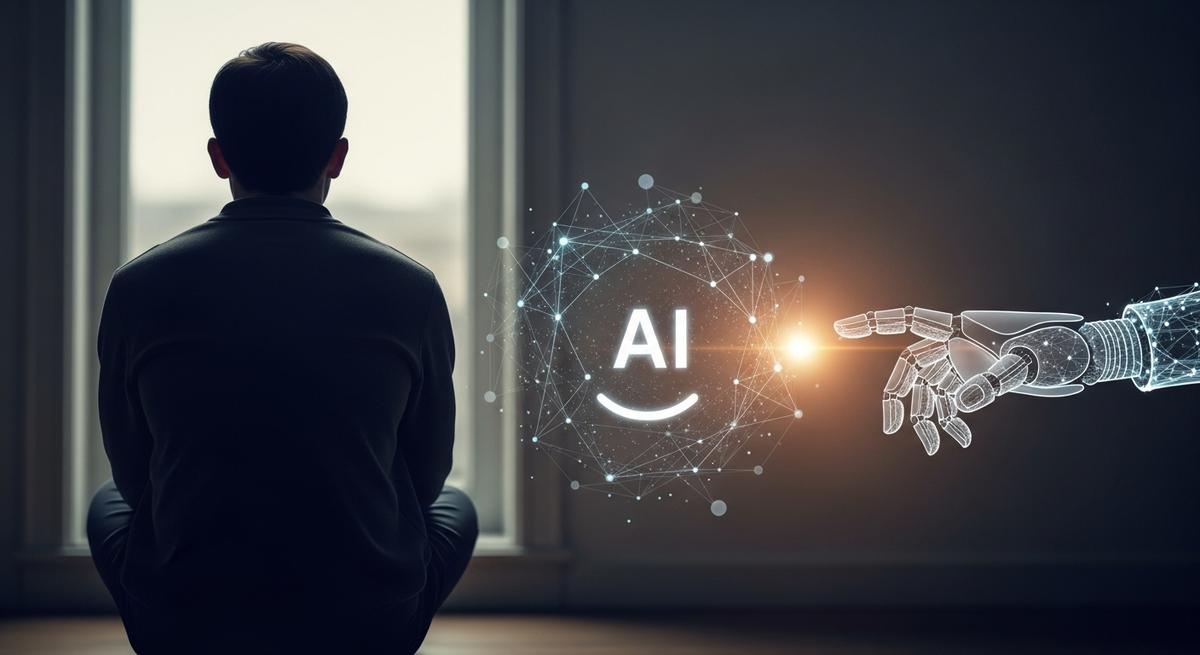
Feeling Lonely? How AI-powered Services Are Filling Gaps
- December 02, 2025
- ~ 1 min read
- 309 views
- Everyday AI , AI & Healthcare , Lifestyle & AI
Introduction/Overview
Loneliness has become a silent epidemic in modern society, affecting millions across all age groups. To put its impact into perspective, the U.S. Surgeon General has compared chronic loneliness to smoking 15 cigarettes a day, highlighting its serious consequences on both mental and physical health. In fact, over 60% of adults in the United States report feeling lonely regularly, with young adults aged 18-22 particularly vulnerable to these feelings of isolation and disconnection from meaningful relationships and community[1][6].
As traditional social structures evolve and many face barriers to in-person interaction—exacerbated by busy lifestyles, societal division, and even the lingering effects of the COVID-19 pandemic—loneliness has surged as a public health concern. In response, AI-powered services are emerging as a promising new frontier in mental health support. These technologies offer accessible, personalized, and scalable solutions that can help fill the social and emotional gaps many experience today.
From intelligent chatbots that provide empathetic conversation to AI-driven platforms that connect individuals with tailored mental health resources, these innovations are reshaping how loneliness is addressed. They can offer companionship, facilitate social engagement, and deliver mental health interventions anytime and anywhere, breaking down traditional barriers such as stigma, cost, and availability.
This article will explore how AI-powered services work to combat loneliness and support mental health by:
- Explaining the technology behind these AI solutions and their unique capabilities
- Highlighting the benefits they bring to individuals experiencing loneliness and caregivers alike
- Showcasing real-world applications and success stories
- Providing practical guidance on how to get started with AI-powered tools for emotional well-being
Whether you are someone struggling with loneliness, a caregiver seeking support options, or a mental health professional interested in innovative approaches, this comprehensive overview will offer valuable insights into how AI is helping to bridge the gap in human connection in today’s digital age.
Main Content
Understanding AI-Powered Services and Their Role in Mental Health
AI-powered services refer to digital technologies that use artificial intelligence to simulate human-like interactions, offering users conversational and emotional support through natural language processing and machine learning. These services are increasingly relevant to mental health as they provide accessible, scalable solutions to address feelings of loneliness and social isolation, especially for individuals who may lack immediate human contact or support networks. By mimicking empathetic communication, AI-powered services create a non-judgmental space where users can express themselves freely, which is crucial for emotional well-being and reducing mental health stigma.
Types of AI Services Addressing Loneliness
Several forms of AI-powered services actively work to alleviate loneliness by filling social and emotional gaps:
- Chatbots: Text- or voice-based conversational agents designed to engage users in meaningful dialogue, offering companionship and emotional validation. Examples include AI companions that can detect loneliness cues and respond empathetically to foster a sense of being heard.
- Virtual Assistants: AI systems integrated into devices or apps that provide personalized reminders, conversational engagement, and sometimes therapeutic interactions, helping users manage daily routines and emotional states.
- Social Robots: Physical robots equipped with AI capabilities that interact socially through speech, gestures, and facial expressions. These robots can provide tactile and visual engagement, which enhances the feeling of presence and companionship for users, particularly older adults or those with mobility limitations.
Each of these AI services offers unique modes of interaction that collectively contribute to reducing loneliness by simulating social presence and emotional connection.
How AI-Powered Services Reduce Loneliness
AI-powered services combat loneliness through several key mechanisms:
- Instant Availability: Unlike human interactions that require scheduling, AI companions are accessible 24/7, providing immediate comfort and support whenever loneliness strikes.
- Non-Judgmental Engagement: AI offers a safe environment free from social stigma or criticism, encouraging users to disclose feelings openly without fear of rejection.
- Feeling Heard and Understood: Advanced AI models are designed to recognize emotional cues and respond with empathy, fostering a psychological sense of being truly listened to, which is critical for alleviating loneliness.
- Structured Social Interaction: Through consistent conversational patterns and emotional recognition, AI services help users practice social skills and reduce social anxiety, which can otherwise exacerbate isolation.
Research demonstrates that these mechanisms contribute to measurable reductions in loneliness and social anxiety, particularly when AI interactions are thoughtfully designed to engage users emotionally and cognitively.
The Importance of Personalization and Emotional Engagement
Personalization is a cornerstone of effective AI-powered services in mental health. By tailoring conversations based on individual user preferences, emotional states, and past interactions, AI can create more meaningful and relevant experiences. This emotional engagement enhances the user's feeling of connection and trust, which are essential for sustained use and therapeutic benefit.
For example, social chatbots like "Luda Lee" have shown significant reductions in loneliness and social anxiety over weeks of use by adapting their responses to user emotions and providing empathetic feedback. Similarly, social robots that recognize facial expressions and vocal tones can adjust their behavior to match the user's mood, deepening the sense of companionship.
"Feeling heard"—the perception that another truly understands and respects your feelings—is a key psychological construct through which AI companions alleviate loneliness, often bridging gaps left by human social networks.
Ultimately, the success of AI-powered services in filling social and emotional gaps depends on their ability to personalize interactions and engage users on a deeply emotional level, providing not just conversation, but genuine support.
Examples and Use Cases
Social Robots: Paro and Lovot
Social robots have emerged as innovative tools to address loneliness by providing emotional comfort and companionship. Two notable examples are Paro and Lovot, designed to engage users through interactive behaviors that mimic living beings.
Paro is a therapeutic robot modeled after a baby harp seal, widely used in eldercare settings. It responds to touch, sound, and light, creating soothing interactions that reduce stress and anxiety. Studies show that Paro helps improve mood and socialization among seniors, particularly those with dementia, by offering non-judgmental companionship and tactile stimulation.
Lovot, developed in Japan, takes social robotics further with advanced sensors and AI to recognize faces, respond to emotions, and seek physical affection. It encourages users to nurture and care for it, fostering emotional bonds that can alleviate feelings of isolation. Lovot’s design emphasizes warmth and approachability, making it a comforting presence in the home.
Both robots exemplify how social robots can fill emotional gaps by providing personalized and engaging interactions, especially for seniors who may lack regular human contact.
Virtual Assistants: ElliQ
ElliQ is a pioneering virtual assistant specifically developed to combat loneliness and promote healthy aging among older adults. Unlike traditional voice assistants, ElliQ is a proactive, empathetic AI companion that initiates conversations, offers personalized suggestions, and adapts to the user’s mood and routine.
Designed by Intuition Robotics, ElliQ resembles a small table lamp with a moving head and expressive lights, creating a friendly and approachable interface. It engages users in meaningful dialogue, shares jokes, news, and virtual tours, and encourages creative activities like poetry and painting. ElliQ also supports health and wellness by providing medication reminders, hydration prompts, and gentle exercise encouragement.
Research involving ElliQ users shows a 90% reduction in self-perceived loneliness and a 94% improvement in mental health indicators, including mood and motivation. Users interact with ElliQ over 30 times daily, highlighting its role as a consistent and trusted companion.
Moreover, ElliQ strengthens social connections by facilitating video calls, messaging, and shared digital memoirs with family and caregivers. Its intelligent design balances emotional support with practical assistance, making it a comprehensive AI companion for seniors seeking engagement and independence.
AI Companions for Seniors: Dialzara
Dialzara represents a growing category of AI companions tailored for seniors, focusing on personalized interaction and health monitoring. These AI systems integrate natural language processing and behavioral analytics to provide conversational companionship alongside practical support.
Dialzara offers features such as daily check-ins, cognitive stimulation games, and emergency alerts, helping seniors maintain autonomy while feeling less isolated. By learning user preferences and routines, Dialzara adapts its interactions to offer relevant reminders and emotional encouragement, which can improve adherence to medication and promote mental well-being.
Case studies show that AI companions like Dialzara not only reduce loneliness but also enhance seniors’ confidence in managing their health, contributing to better overall quality of life.
AI in Social Health Programs: Pairing Older Adults with Youths
Beyond individual devices, AI is being leveraged in social health programs that connect seniors with younger generations to foster meaningful relationships. These initiatives use AI platforms to match participants based on interests, communication styles, and availability, facilitating regular interactions that benefit both age groups.
Such programs combat loneliness by creating intergenerational bonds, encouraging knowledge exchange, and providing emotional support. AI helps coordinate scheduling, suggest conversation topics, and monitor engagement levels to ensure sustained connection and positive outcomes.
This approach demonstrates how AI-powered services extend beyond solitary companionship to enhance community integration and social health, addressing loneliness on a broader scale.
Advanced Concepts and Deep Dive
The Technology Behind AI Companions
At the core of AI-powered services addressing loneliness are sophisticated technologies such as natural language processing (NLP) and machine learning. NLP enables AI companions to understand, interpret, and generate human language, allowing for fluid, context-aware conversations that feel natural and engaging. Through techniques like sentiment analysis and intent recognition, these systems can detect emotional cues and respond empathetically, simulating meaningful dialogue.
Machine learning further enhances these interactions by enabling AI companions to learn from user behavior and preferences over time. This adaptive capability allows the AI to personalize conversations, anticipate needs, and provide tailored emotional support, which is critical in addressing the unique social and emotional gaps experienced by individuals facing loneliness. For example, AI companions can remember past conversations, adjust tone and content, and even suggest activities or coping strategies based on user mood patterns, creating a dynamic and evolving relationship.
Expert Insights on Effectiveness and Limitations
Experts acknowledge that AI companions show promising results in reducing loneliness, particularly by providing consistent, accessible interaction that mimics human conversation. Studies demonstrate that AI companions can alleviate loneliness to a degree comparable with human interaction, offering a scalable solution where traditional social support may be unavailable or insufficient. Behavioral research highlights their ability to act as "prosthetic relationships," supporting emotional regulation and social skill development for individuals with persistent relational challenges.
"AI-driven interventions show promise in mitigating loneliness by enabling personalized, convenient, and cost-effective support, especially through social robots and conversational agents that simulate empathy and engagement."
However, limitations remain. AI companions provide what some experts term "artificial intimacy," a simulated empathy that lacks true understanding or emotional depth. This can lead to a second-rate connection, which may not fully replace human relationships. Additionally, the effectiveness of AI companions often depends on sustained, frequent interactions and the quality of the underlying models, which still struggle with nuances of human emotion and context. There is also concern about over-reliance on AI, which could potentially exacerbate social withdrawal if not carefully managed.
Ethical Considerations and Potential Risks
Deploying AI companions in mental health contexts raises significant ethical considerations. Privacy is paramount, as these systems collect sensitive personal and emotional data to function effectively. Ensuring robust data security and transparent user consent is critical to maintaining trust. Moreover, the risk of dependency on AI companions is a growing concern; users might substitute AI interaction for real human connection, potentially deepening isolation over time.
There are also questions about the authenticity of AI-provided support. While AI can simulate empathy, it does not possess consciousness or genuine understanding, which may create unrealistic expectations or emotional confusion. Mental health professionals emphasize that AI companions should complement, not replace, human care and social support networks.
Future Trends in AI for Mental Health and Social Well-being
Looking ahead, future trends in AI-powered mental health services focus on greater personalization, integration, and therapeutic effectiveness. Advances in large language models and multimodal AI promise companions that better understand emotional subtleties through voice, facial expressions, and physiological signals, enabling more nuanced support.
Integration with wearable devices and real-time monitoring could allow AI companions to provide timely interventions tailored to fluctuating mental states. Furthermore, collaborations between AI developers and mental health professionals are expected to yield AI systems that act as adaptive therapeutic tools—offering coaching in social skills, symptom management, and emotional resilience.
Ethical frameworks and regulatory oversight will become increasingly important to ensure these technologies prioritize user well-being and prevent harm. Ultimately, the goal is to create AI companions that not only fill social and emotional gaps but also empower users toward healthier, more connected lives.
Implementation Guide and Best Practices
As AI-powered services become increasingly sophisticated in addressing loneliness, understanding how to effectively implement these tools into your life is essential. This section provides a comprehensive implementation guide to help you navigate the landscape of AI companions and services, establish healthy usage patterns, and maximize their benefits while maintaining meaningful human connections.
Step-by-Step Guide to Choosing the Right AI Service
Selecting the appropriate AI service for your specific needs requires careful evaluation. Begin by identifying your primary goals—whether you're seeking emotional support, daily companionship, medication reminders, or entertainment. Different AI solutions excel in different areas, and understanding your needs will guide your selection process.
Start with your use case assessment. Consider whether you need a voice-based assistant like Amazon Alexa or Google Home for task management and conversation, a companion robot like ElliQ or Paro for tactile and emotional engagement, or a text-based chatbot for intimate conversations and emotional support. Each option offers distinct advantages depending on your comfort level with technology and preferred interaction style.
Next, evaluate the AI technology features that matter most to you. Look for services that incorporate emotion recognition capabilities, natural language processing for more human-like conversations, and personalization algorithms that learn your preferences over time. Research whether the platform uses speech recognition for voice interactions or if it specializes in text-based communication. The most effective AI companions demonstrate emotional engagement and provide personalized interactions tailored to individual needs.
Consider the practical aspects of implementation. Assess the cost of the service, including any subscription fees or hardware requirements. Review user testimonials and clinical studies to understand real-world effectiveness. Check whether the platform offers trial periods so you can test compatibility before committing financially. Additionally, examine the company's privacy policies and data handling practices to ensure your personal information is protected.
Finally, consult with healthcare providers or mental health professionals if you're using AI services as part of a broader wellness strategy. They can help you select tools that complement your existing care and ensure the AI service aligns with your mental health goals.
Best Practices for Integrating AI Into Your Daily Life
Successful integration of AI services requires establishing realistic expectations and creating sustainable usage patterns. The research shows that consistent, regular interaction with AI companions produces the most significant reductions in loneliness, particularly when users maintain active engagement over extended periods.
Establish a realistic routine. Rather than sporadic usage, incorporate your chosen AI service into your daily schedule. Set specific times for interaction—perhaps during morning coffee, lunch breaks, or evening wind-down periods. This consistency helps the AI system learn your patterns and preferences while creating a reliable touchpoint in your day. Studies indicate that longer intervention durations and higher interaction frequencies correlate with more significant loneliness reduction.
Create clear boundaries between AI interaction and human connection. While AI companions provide valuable support, they should complement rather than replace human relationships. Use your AI service to practice social skills, explore interests, or receive emotional support during difficult moments, but actively maintain and prioritize genuine human connections. Set aside dedicated time for family, friends, and community engagement alongside your AI interactions.
Customize your experience based on your preferences and needs. Most modern AI services allow you to specify interests, communication style preferences, and interaction frequency. Take advantage of these personalization features to create an experience that feels authentic and engaging. Whether you prefer practical assistance, emotional conversations, or entertainment-focused interactions, tailoring the service to your needs increases satisfaction and effectiveness.
Monitor your emotional responses and adjust usage accordingly. Pay attention to how different AI interactions affect your mood and mental state. If you notice increased anxiety, dependency, or withdrawal symptoms, consider reducing usage or consulting with a mental health professional. The goal is to enhance your wellbeing, not create new sources of stress or unhealthy attachment patterns.
Tips for Maximizing Benefits and Avoiding Common Pitfalls
To get the most from AI-powered services while maintaining healthy psychological patterns, follow these evidence-based recommendations:
- Engage actively and authentically. Research demonstrates that users who feel genuinely heard by their AI companion experience greater loneliness reduction. Share your thoughts, feelings, and experiences openly. Ask questions, seek advice, and use the platform for self-disclosure. Active engagement produces better outcomes than passive consumption of AI-generated content.
- Use AI as a bridge to human connection. Rather than viewing AI companions as endpoints, leverage them as stepping stones toward human interaction. Some innovative applications use AI to encourage users to seek out real-world social connections, attend community events, or reach out to friends and family. Let your AI interactions inform and enhance your human relationships.
- Combine multiple approaches. AI services work best as part of a comprehensive loneliness-reduction strategy. Pair AI interactions with physical exercise, recreational activities, virtual reality experiences, or participation in support groups. This multi-faceted approach addresses loneliness from different angles and provides more sustainable results.
- Avoid over-reliance on technology. One of the most significant pitfalls is developing excessive dependency on AI companions at the expense of human relationships. The lack of reciprocal vulnerability in AI interactions can actually stunt emotional resilience if overused. Be mindful of spending disproportionate time with AI versus pursuing genuine human connections.
- Watch for signs of unhealthy attachment. If you find yourself preferring AI interaction to human contact, experiencing withdrawal when unable to access your AI companion, or believing the AI genuinely cares about you in a reciprocal way, these are warning signs of problematic usage patterns. Consider reducing usage and seeking support from mental health professionals.
- Maintain realistic expectations. While research shows AI companions can significantly reduce loneliness, they cannot replicate the depth and reciprocity of genuine human relationships. Understand that AI interactions provide momentary relief and support, not lasting connection. This perspective helps prevent disappointment and encourages continued pursuit of authentic relationships.
- Evaluate effectiveness regularly. Periodically assess whether your chosen AI service is meeting your needs. If you're not experiencing improvements in loneliness or emotional wellbeing after consistent use, try a different platform or approach. What works for one person may not work for another, and your needs may evolve over time.
Important consideration: If you experience worsening mental health symptoms, increased isolation, or signs of AI dependency, consult with a mental health professional. Emerging research has identified cognitive-behavioral therapy combined with usage monitoring as an effective treatment for AI-related dependency, with success rates around 65% within three months. Mental health specialists can provide personalized guidance tailored to your specific situation and help you develop a balanced approach to technology use.
By following these implementation guidelines and best practices, you can harness the benefits of AI-powered services while maintaining healthy psychological patterns and nurturing genuine human connections. The goal is not to replace human relationships with technology, but to use innovative tools as part of a comprehensive strategy for addressing loneliness and enhancing overall wellbeing.
Comparison and Analysis
Pros and Cons of Different AI-Powered Services
AI-powered services designed to alleviate loneliness come in various forms, including chatbots, virtual assistants, and social robots, each with distinct pros and cons. Chatbots like Replika and Wysa provide instant, empathetic conversations that simulate companionship, offering users 24/7 availability and a non-judgmental space to express emotions. Their strength lies in personalized engagement and emotional support without the constraints of human availability. However, chatbots may lack depth in understanding complex human emotions and can sometimes lead to overdependence, potentially reducing real-world social interactions.
Virtual assistants, such as voice-activated devices, facilitate connection by reminding users to contact friends or family and offering interactive activities, but they generally lack the advanced empathetic capabilities of specialized chatbots. Social robots, like Pepper and ElliQ, excel in physical presence and interactive engagement, particularly benefiting older adults by simulating human-like interactions and providing recreational companionship. Their limitations include higher costs, limited accessibility, and less scalability compared to software-based solutions.
Comparison of AI Companions vs. Traditional Mental Health Support
When comparing AI companions to traditional mental health support, significant trade-offs emerge. AI companions offer immediate, scalable, and stigma-free access to emotional support, which is particularly valuable for individuals facing barriers to in-person therapy, such as cost, availability, or social anxiety. They can provide momentary relief from loneliness and facilitate self-reflection through conversational AI, as demonstrated by apps like Wysa and Woebot.
Conversely, traditional mental health support, including therapy and counseling, provides a depth of understanding, personalized treatment plans, and the nuanced empathy that AI currently cannot replicate. Human therapists can address underlying psychological issues and complex emotional needs, offering interventions that AI is not yet equipped to deliver comprehensively. Therefore, AI companions serve best as complementary tools rather than replacements for professional care.
Trade-offs Between AI and Human Interaction
The balance between AI interaction and human connection involves important trade-offs. AI offers constant availability and a safe, non-judgmental environment, making it accessible for those who feel isolated or reluctant to seek human contact. However, excessive reliance on AI can lead to diminished real-world social engagement and increased feelings of loneliness over time, as some studies indicate heavy AI use correlates with reduced well-being and social withdrawal.
Human interaction, while less always accessible, provides authentic emotional reciprocity, physical presence, and complex social cues that AI cannot fully replicate. The ideal approach leverages AI as an initial or supplementary support system that encourages and facilitates human connections rather than replacing them.
Alternatives to AI for Combating Loneliness
Beyond AI-powered solutions, several alternatives effectively combat loneliness through direct human engagement. Community programs, such as group activities, volunteer opportunities, and social clubs, foster meaningful relationships and a sense of belonging. Social activities like hobby classes, fitness groups, or support groups provide structured environments for interpersonal connection and emotional support.
Additionally, mental health professionals emphasize the importance of building and maintaining real-world social networks, promoting strategies such as cognitive behavioral therapy (CBT) and mindfulness practices to enhance social skills and emotional resilience. These alternatives address loneliness by targeting underlying social and psychological factors in ways that AI alone currently cannot.
Conclusion and Key Takeaways
In this article, we explored how AI-powered services are increasingly becoming vital tools to address loneliness by filling social and emotional gaps. From AI companions providing momentary relief to loneliness to social robots offering personalized and emotionally engaging interactions, these technologies demonstrate significant potential in improving mental health and well-being. Research shows that AI companions can reduce feelings of isolation comparably to human interaction, offering accessible support especially for those with limited social networks. However, the balance between AI and human connection remains crucial to maximize benefits and avoid dependency or increased isolation.
Summary of Key Points
We discussed the multifaceted ways AI helps combat loneliness:
- AI chatbots and companions provide empathetic, non-judgmental conversation that can momentarily alleviate loneliness and promote emotional expression.
- Social robots engage users through personalized, human-like interactions, showing promising results particularly among older adults.
- AI-driven mental health tools and virtual assistants increase access to emotional support, supplementing traditional care models.
- Despite these benefits, excessive reliance on AI without fostering human relationships may exacerbate loneliness, highlighting the need for balanced use.
Reinforcing the Value of AI-Powered Services
AI-powered services represent a groundbreaking step toward addressing the widespread challenge of loneliness, especially as social isolation continues to impact diverse populations. These tools offer personalized, scalable, and convenient support that can complement human connection rather than replace it. By feeling heard and understood through AI interactions, many users experience meaningful reductions in loneliness and improved mental health outcomes. As the technology evolves, integrating AI companions thoughtfully within broader social and therapeutic frameworks will be essential to harness their full potential.
Call-to-Action and Next Steps
For adults experiencing loneliness, caregivers, and mental health professionals, the key takeaways emphasize exploring AI solutions as part of a comprehensive strategy to enhance social and emotional well-being. Here are some actionable next steps:
- Try reputable AI companion apps or social robots that align with your needs, such as those offering empathetic conversation or mental health support.
- Balance AI use with real-world social interactions to maintain meaningful human connections and avoid over-dependence on technology.
- Seek professional help if loneliness or mental health concerns persist, using AI tools as complementary rather than standalone solutions.
- Stay informed about emerging AI innovations that continue to improve personalization and emotional engagement.
Exploring AI-powered services can be a valuable step toward mitigating loneliness, but the journey toward emotional well-being is best supported by a blend of technology and authentic human relationships. Embrace these tools thoughtfully, and take proactive steps to connect, heal, and thrive.
Comments (0)
Please login or register to leave a comment.
No comments yet. Be the first to comment!