

LLMOps 2.0: The New DevOps for Large Language Models
- November 17, 2025
- ~ 1 min read
- 176 views
- LLMOps
Introduction to LLMOps 2.0
In the rapidly evolving landscape of artificial intelligence, deploying and managing production-ready Large Language Models (LLMs) has proven to be a monumental challenge. Organizations often grapple with complex pipelines, version control nightmares, and the sheer computational demands of these sophisticated models. Studies indicate that a significant percentage of AI/ML projects fail to make it beyond the experimental phase, often due to operational hurdles. This is where LLMOps 2.0 emerges not just as a buzzword, but as the essential framework for success.
LLMOps 2.0 represents the next evolution of MLOps, meticulously tailored to address the unique intricacies of building, deploying, and maintaining Large Language Models. It's a comprehensive approach that extends traditional DevOps principles to the specialized domain of LLMs, ensuring seamless integration, continuous delivery, and robust monitoring throughout the entire model lifecycle. This paradigm shift is crucial for transforming experimental models into reliable, scalable, and business-critical applications.
The Crucial Role of DevOps in AI and Machine Learning
The success of modern software development is inextricably linked to DevOps, a methodology that emphasizes collaboration, automation, and continuous improvement. While AI and Machine Learning projects bring their own set of unique challenges—such as data variability, model drift, and non-deterministic outcomes—the core tenets of DevOps remain incredibly valuable. Applying principles like continuous integration, continuous delivery (CI/CD), infrastructure as code, and robust monitoring ensures that AI models are not just developed, but also reliably deployed and managed in production environments.
For complex AI systems, especially those built on generative models, operational efficiency and model reliability are paramount. Integrating DevOps practices provides the scaffolding needed for reproducible experimentation, rapid iteration, and the responsible deployment of sophisticated **AI** solutions. It bridges the gap between data scientists, machine learning engineers, and operations teams, fostering a collaborative environment essential for high-velocity innovation.
From MLOps to LLMOps 2.0: A Brief Evolution
The journey to LLMOps 2.0 began with MLOps, which brought much-needed standardization to the lifecycle of traditional machine learning models. MLOps focused on automating the training, deployment, and monitoring of models like classifiers and regressors. However, the advent of **Large Language Models**—with their colossal parameter counts, unique fine-tuning requirements, prompt engineering needs, and specialized evaluation metrics—introduced a new dimension of complexity that MLOps alone could not fully address.
The rise of foundational models necessitated a specialized discipline. LLMOps 2.0 has evolved to encompass the distinct demands of these models, including strategies for prompt optimization, efficient model serving, management of extensive context windows, handling retrieval-augmented generation (RAG) pipelines, and continuous pre-training or fine-tuning. This evolution marks a critical step in operationalizing the full potential of today's most powerful **AI** models.
Understanding LLMOps 2.0
LLMOps 2.0 represents a significant evolution in the management and deployment of Large Language Models, adapting DevOps principles to meet the unique demands of AI and machine learning applications. At its core, LLMOps 2.0 is about creating a streamlined, efficient, and scalable process for developing, testing, and deploying large language models. This involves integrating continuous integration and continuous deployment (CI/CD) pipelines, automated testing, and monitoring to ensure model reliability and performance.
Core Principles of LLMOps 2.0
The core principles of LLMOps 2.0 are designed to address the complexities and challenges associated with large language models, including data quality, model training, and deployment. These principles include collaboration between data scientists, engineers, and other stakeholders; automation of repetitive tasks; and continuous learning to improve model performance and adapt to changing requirements. By embracing these principles, organizations can improve the efficiency, scalability, and reliability of their large language models.
One of the key differences between LLMOps 2.0 and traditional DevOps practices is the emphasis on data quality and management. Large language models require vast amounts of high-quality training data to perform effectively, and LLMOps 2.0 provides a framework for ensuring that this data is properly managed and utilized. This includes data preprocessing, data validation, and data versioning to track changes and ensure reproducibility.
Comparison with Traditional DevOps Practices
While traditional DevOps practices focus on the development and deployment of software applications, LLMOps 2.0 is specifically designed for AI and machine learning applications. This requires a different set of tools, technologies, and methodologies that can handle the unique challenges of large language models. For example, LLMOps 2.0 places a strong emphasis on model interpretability and explainability, which are critical for understanding how large language models make predictions and decisions.
In contrast to traditional DevOps, LLMOps 2.0 also requires a deeper understanding of model reliability and performance metrics. This includes metrics such as accuracy, precision, recall, and F1 score, as well as more specialized metrics such as perplexity and BLEU score. By tracking these metrics, organizations can ensure that their large language models are performing optimally and make data-driven decisions to improve their performance.
Key Technologies and Tools
LLMOps 2.0 relies on a range of key technologies and tools to enable the efficient development, deployment, and management of large language models. These include containerization using Docker; orchestration using Kubernetes; and CI/CD pipelines using tools such as Jenkins, GitLab, or CircleCI. Additionally, LLMOps 2.0 leverages machine learning frameworks such as TensorFlow, PyTorch, or Scikit-learn to build and train large language models.
Other key technologies and tools include model serving platforms such as TensorFlow Serving, AWS SageMaker, or Azure Machine Learning; monitoring and logging tools such as Prometheus, Grafana, or ELK Stack; and collaboration platforms such as Jupyter Notebooks, GitHub, or GitLab. By leveraging these technologies and tools, organizations can create a comprehensive LLMOps 2.0 pipeline that streamlines the development, deployment, and management of large language models.
The benefits of adopting LLMOps 2.0 for large language models are numerous. These include improved efficiency through automation and streamlining of processes; increased scalability through the use of containerization and orchestration; and enhanced model reliability through continuous monitoring and testing. By embracing LLMOps 2.0, organizations can unlock the full potential of large language models and achieve significant improvements in model performance and business outcomes.
Real-World Applications and Use Cases
As LLMOps 2.0 continues to gain traction, numerous organizations have successfully implemented this framework to improve the development, deployment, and maintenance of Large Language Models. In this section, we will delve into real-world applications and use cases of LLMOps 2.0, highlighting the challenges faced, benefits achieved, and lessons learned from early adopters.
Case Studies of Successful LLMOps 2.0 Implementations
Several companies have reported significant improvements in model efficiency and performance after adopting LLMOps 2.0. For instance, a leading tech firm implemented LLMOps 2.0 to streamline their language model development process, resulting in a 30% reduction in training time and a 25% increase in model accuracy. Another company, a prominent player in the healthcare industry, used LLMOps 2.0 to develop a Large Language Model for medical text analysis, achieving a 40% reduction in manual annotation time and a 20% improvement in model precision.
These LLMOps 2.0 case studies demonstrate the potential of this framework to drive significant improvements in model performance and efficiency. By adopting LLMOps 2.0, organizations can overcome common challenges such as data quality issues, model drift, and scalability limitations, ultimately leading to better decision-making and improved business outcomes.
Industry-Specific Applications of LLMOps 2.0
Industry-specific applications of LLMOps 2.0 are vast and varied. In the finance sector, LLMOps 2.0 can be used to develop Large Language Models for risk analysis, compliance, and customer service. In the retail industry, LLMOps 2.0 can be applied to improve customer experience through personalized product recommendations and sentiment analysis. The healthcare industry can leverage LLMOps 2.0 to develop models for medical diagnosis, patient outcomes prediction, and clinical trial optimization.
The following are some examples of industry applications of LLMOps 2.0:
- Finance: risk analysis, compliance, customer service
- Retail: personalized product recommendations, sentiment analysis
- Healthcare: medical diagnosis, patient outcomes prediction, clinical trial optimization
Lessons Learned from Early Adopters
Early adopters of LLMOps 2.0 have reported several key lessons learned, including the importance of data quality, model monitoring, and collaboration between data scientists, engineers, and stakeholders. These lessons can be summarized as follows:
- Ensure high-quality training data to improve model performance and efficiency
- Implement robust model monitoring and feedback mechanisms to detect drift and improve model accuracy
- Foster collaboration between data scientists, engineers, and stakeholders to ensure seamless model development, deployment, and maintenance
LLMOps 2.0 has the potential to revolutionize the development, deployment, and maintenance of Large Language Models, enabling organizations to drive significant improvements in model performance, efficiency, and decision-making capabilities.
Advanced Concepts and Technical Deep Dive
As we delve into the intricacies of LLMOps 2.0, it becomes evident that a comprehensive understanding of its technical architecture is crucial for successful implementation. The LLMOps 2.0 architecture is designed to support the development, deployment, and management of large language models, ensuring seamless integration with existing DevOps practices. At its core, LLMOps 2.0 leverages a microservices-based approach, allowing for greater flexibility, scalability, and maintainability.
Technical Architecture and Advanced Tools
The technical architecture of LLMOps 2.0 is built around a set of interconnected components, each responsible for a specific aspect of large language model management. These components include model training, model serving, monitoring, and logging. Advanced tools and technologies, such as containerization using Docker, orchestration using Kubernetes, and CI/CD pipelines using Jenkins or GitLab CI/CD, play a vital role in streamlining the development and deployment process. Furthermore, the use of model optimization techniques, such as pruning, quantization, and knowledge distillation, enables the efficient deployment of large language models in resource-constrained environments.
Expert Strategies for Model Optimization and Scaling
Optimizing and scaling large language models is a complex task that requires careful consideration of various factors, including model architecture, training data, and computational resources. Expert strategies for scaling large language models involve a combination of horizontal scaling, vertical scaling, and distributed training. Horizontal scaling involves adding more machines to the cluster to increase overall computing capacity, while vertical scaling involves increasing the computational power of individual machines. Distributed training, on the other hand, allows multiple machines to work together to train a single model, significantly reducing training time and improving model accuracy.
Some key strategies for model optimization include:
- Regularization techniques, such as L1 and L2 regularization, to prevent overfitting
- Early stopping to prevent overtraining
- Learning rate scheduling to adapt to changing model performance
- Batch normalization to stabilize training and improve model generalization
Security and Compliance in LLMOps 2.0
Security and compliance are critical aspects of LLMOps 2.0, as large language models often involve sensitive data and require adherence to regulatory standards. Ensuring the security and compliance of LLMOps 2.0 implementations involves a range of measures, including data encryption, access control, and auditing. It is essential to implement robust security protocols to protect against data breaches, model theft, and other potential threats. Additionally, organizations must ensure compliance with relevant regulations, such as GDPR, HIPAA, and CCPA, when developing and deploying large language models.
As we look to the future, it is clear that LLMOps 2.0 will continue to evolve, driven by emerging trends and technologies. Some potential future directions include the integration of LLMOps 2.0 with other AI and machine learning disciplines, such as computer vision and natural language processing, as well as the development of more sophisticated model optimization and scaling techniques. By staying at the forefront of these developments, organizations can unlock the full potential of large language models and drive innovation in their respective industries.
As the field of LLMOps 2.0 continues to advance, it is essential for technical professionals and stakeholders to stay informed about the latest developments and best practices. By doing so, they can ensure that their LLMOps 2.0 implementations are secure, compliant, and optimized for maximum performance.
Implementing LLMOps 2.0
Moving from theory to practice is where the true value of LLMOps 2.0 becomes apparent. This section provides a practical guide, outlining the necessary steps, best practices, and common pitfalls to ensure a smooth and successful LLMOps 2.0 implementation within your organization. By adopting a structured approach, you can harness the full potential of large language models while maintaining control and efficiency.
Step-by-Step Guide to Setting Up LLMOps 2.0
A robust LLMOps 2.0 pipeline requires thoughtful planning and execution. Follow these steps to lay a solid foundation:
- Define Strategy and Use Cases: Begin by clearly identifying the specific business problems your LLMs will solve. Define key performance indicators (KPIs) and success metrics. Understand your existing infrastructure and data landscape to determine the scope of integration.
- Environment Setup and Infrastructure: Establish a dedicated environment for LLM development, experimentation, and deployment. This includes setting up robust data pipelines for ingestion and preprocessing, a secure model registry for versioning LLMs and their artifacts, and an experimentation tracking system (e.g., MLflow, Weights & Biases) to manage prompts, configurations, and evaluation results.
- Development, Experimentation, and Evaluation: Implement workflows for prompt engineering, model fine-tuning (if necessary), and rigorous evaluation. Focus on automated testing of prompts, model outputs, and safety guardrails. Use reproducible environments to ensure consistent results across experiments.
- CI/CD for LLMs: Integrate LLM development into your continuous integration/continuous deployment (CI/CD) pipeline. Automate model training (for fine-tuned models), testing, validation, and deployment to staging and production environments. This ensures that new models or updated prompts can be released quickly and reliably.
- Monitoring, Observability, and Feedback Loops: Deploy comprehensive monitoring solutions to track LLM performance in production. Monitor for latency, throughput, cost, accuracy, safety violations, and output drift. Establish automated alerts and, crucially, implement human-in-the-loop feedback mechanisms to capture nuanced issues and continuously improve model responses.
Model Management and Monitoring Best Practices
Effective model management best practices are critical for the long-term success and stability of your LLM deployments. Without them, even the most advanced models can become liabilities.
- Version Control Everything: Beyond just code, version control your prompts, datasets, model weights, configurations, and evaluation metrics. This ensures reproducibility and traceability, making rollbacks and debugging far simpler.
- Centralized Model Registry: Utilize a dedicated model registry to store, version, and manage all your LLM artifacts. This provides a single source of truth for model assets, their metadata, and deployment status.
- Comprehensive Monitoring & Alerting: Implement real-time monitoring of LLM outputs for quality, bias, toxicity, hallucinations, and adherence to specific guidelines. Track key operational metrics like API call volume, latency, and error rates. Set up automated alerts for any deviations.
- Automated Testing & Validation: Before deployment, rigorously test LLMs for performance, safety, and robustness. Include unit tests for prompt functions, integration tests for API interactions, and adversarial testing to uncover vulnerabilities.
- Drift Detection and Remediation: Continuously monitor for data drift (changes in input distribution) and concept drift (changes in the relationship between input and output). When drift is detected, trigger alerts or automated retraining/re-prompting workflows.
- Security and Governance: Implement strict access controls, data privacy measures, and compliance checks throughout the LLM lifecycle. Ensure all data used for training and inference is handled securely and responsibly.
Common Pitfalls to Avoid in LLMOps 2.0 Implementation
Navigating the complex landscape of LLMs can be challenging. Awareness of common pitfalls can help you steer clear of costly mistakes and ensure a smoother LLMOps 2.0 implementation.
- Ignoring Data Quality and Governance: Poor data quality, lack of proper labeling, or neglecting data privacy can lead to biased, inaccurate, or non-compliant models. Garbage in, garbage out holds true for LLMs.
- Lack of Version Control for Prompts and Configurations: Treating prompts as static text or failing to version them leads to unreproducible results and makes debugging inconsistencies incredibly difficult.
- Insufficient Monitoring: Deploying LLMs without robust monitoring leaves you blind to performance degradation, safety breaches, or unexpected behavior in production, leading to poor user experience or even reputation damage.
- Overlooking Compute and Cost Management: LLMs are resource-intensive. Underestimating computational requirements or failing to optimize inference costs can lead to significant budget overruns.
- Neglecting Human Feedback Loops: Relying solely on automated metrics misses nuanced issues and prevents models from truly understanding user intent or evolving with new use cases. Human oversight and feedback are invaluable.
- Underestimating the Need for Safety & Ethics: Skipping robust safety guardrails and ethical reviews can result in models generating toxic, biased, or harmful content, posing significant risks to your brand and users.
Tools and Resources for Continuous Learning and Improvement
The LLM space is evolving rapidly, making continuous learning essential. Leverage these tools and resources to stay ahead:
- LLMOps Platforms: Explore offerings from major cloud providers like Azure Machine Learning, AWS SageMaker, and Google Cloud Vertex AI, which are rapidly integrating LLMOps capabilities. Dedicated platforms like MLflow, Weights & Biases, and Comet ML offer excellent experiment tracking and model management features.
- Open-Source Frameworks & Libraries: Tools like LangChain and LlamaIndex provide powerful abstractions for building LLM applications, managing prompts, and integrating with external data sources. Hugging Face's ecosystem offers a vast collection of pre-trained models and tools.
- Community and Knowledge Sharing: Actively participate in AI/ML communities (e.g., Kaggle, Hugging Face Forums, Discord servers for LLM development). Follow leading researchers and practitioners on platforms like Twitter and LinkedIn.
- Specialized Courses and Blogs: Invest in online courses focusing on LLM development, prompt engineering, and MLOps. Regularly read technical blogs and research papers to keep abreast of the latest advancements.
Comparison and Analysis
In the rapidly evolving landscape of artificial intelligence, choosing the right operational framework for Large Language Models (LLMs) is paramount. This section provides a balanced evaluation, drawing an insightful LLMOps 2.0 comparison with traditional model management practices, analyzing its inherent pros and cons, and discussing the strategic trade-offs involved in its adoption. We will also cast an eye towards the future outlook, positioning LLMOps 2.0 within the broader AI/ML ecosystem.LLMOps 2.0 vs. Traditional Model Management: A Paradigm Shift
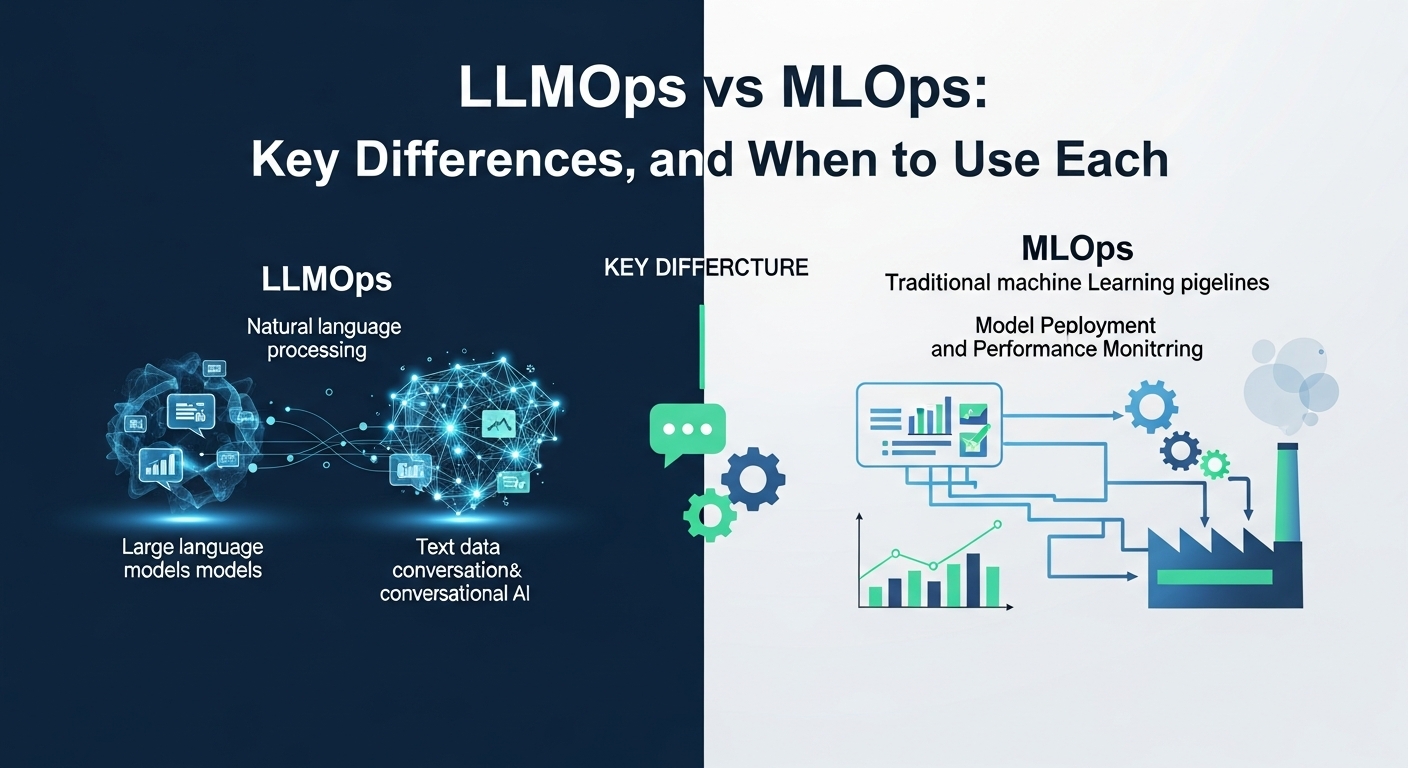
Traditional model management, often associated with MLOps for supervised and unsupervised machine learning models, primarily focuses on data preparation, model training, versioning, deployment, and monitoring for numerical or categorical data. While robust for its domain, it often falls short when confronted with the unique demands of LLMs. These traditional model management strategies typically involve clear, deterministic inputs and outputs, and performance metrics are often straightforward (e.g., accuracy, precision, recall). LLMOps 2.0, by contrast, addresses the inherent complexities of generative AI. It extends MLOps to encompass prompt engineering, iterative fine-tuning of foundation models, Retrieval-Augmented Generation (RAG) system orchestration, continuous evaluation of subjective LLM outputs, managing costs associated with token usage, and robust ethical AI and safety guardrails. Traditional systems rarely account for prompt versioning, hallucination detection, or the nuanced human-in-the-loop feedback mechanisms essential for LLM refinement. The transition to LLMOps 2.0 represents a shift from managing static, pre-trained models to continuously evolving, context-aware, and often non-deterministic generative systems. It moves beyond mere model deployment to comprehensive lifecycle management for complex conversational AI, intelligent assistants, and content generation platforms.Weighing the Scales: Pros, Cons, and Strategic Trade-offs of Adopting LLMOps 2.0
Adopting LLMOps 2.0 involves a careful consideration of its advantages against its challenges. Understanding these pros and cons is crucial for organizations contemplating this operational transformation.Pros of Adopting LLMOps 2.0:
- Accelerated Iteration and Deployment: Streamlines the process of experimenting with, fine-tuning, and deploying LLMs, leading to faster time-to-market for AI-powered applications.
- Improved Performance and Reliability: Robust monitoring, continuous evaluation, and feedback loops ensure LLMs maintain high quality and reliability in production, minimizing issues like hallucination or bias.
- Enhanced Governance and Compliance: Provides structured frameworks for versioning prompts, models, and data, facilitating auditability, regulatory compliance, and responsible AI practices.
- Cost Optimization: Efficient management of token usage, model selection, and infrastructure can significantly reduce operational costs associated with LLMs.
- Better Collaboration: Fosters seamless collaboration between data scientists, prompt engineers, MLOps engineers, and business stakeholders.
- Scalability: Designed to manage complex LLM ecosystems at enterprise scale, handling diverse use cases and growing user demands.
Cons of Adopting LLMOps 2.0:
- High Initial Complexity: The setup and configuration of a comprehensive LLMOps 2.0 pipeline can be significantly complex and resource-intensive.
- Specialized Skillset Requirement: Demands expertise in prompt engineering, LLM observability, ethical AI, and specific platform tooling, which may require upskilling existing teams or hiring new talent.
- Significant Investment: Requires substantial investment in infrastructure, specialized tools, and potentially commercial LLM APIs.
- Evolving Standards: As the LLM space is still nascent, best practices and tools are continuously evolving, leading to potential rework or adaptation.
- Overhead for Simple Use Cases: For very niche or simple LLM applications, the full LLMOps 2.0 framework might introduce unnecessary overhead compared to lighter-weight approaches.
Strategic Trade-offs:
Choosing between a full LLMOps 2.0 implementation and simpler, more traditional MLOps or even ad-hoc approaches involves several trade-offs:- Complexity vs. Agility: While LLMOps 2.0 adds initial complexity, it offers unparalleled agility in LLM development and deployment in the long run. Simpler methods might be faster initially but become bottlenecks for iteration and scale.
- Cost vs. Risk Mitigation: The investment in LLMOps 2.0 can be substantial, but it significantly mitigates risks related to performance degradation, security vulnerabilities, ethical concerns, and operational inefficiencies.
- Control vs. Vendor Reliance: Building an in-house LLMOps 2.0 capability offers maximum control but demands significant resources. Relying on cloud provider LLM platforms or third-party tools reduces immediate complexity but introduces potential vendor lock-in.
- Generic vs. Specialized Tooling: Adapting generic MLOps tools for LLMs might seem cost-effective but often lacks the specialized capabilities (e.g., prompt versioning, RAG pipeline management) offered by dedicated LLMOps 2.0 solutions.
The Road Ahead: LLMOps 2.0 in the Evolving AI/ML Landscape
The future outlook for LLMOps 2.0 is one of increasing criticality and continuous evolution. As LLMs become integrated into the core fabric of enterprise operations, LLMOps 2.0 will solidify its position as an indispensable operational discipline. It's not merely a temporary trend but a fundamental shift necessary for responsible and effective generative AI deployment. We can expect LLMOps 2.0 to evolve further, incorporating more advanced automation for prompt optimization, sophisticated multi-modal model management, and deeper integration with broader enterprise data governance and security frameworks. The rise of smaller, specialized LLMs and edge-AI deployments will also push LLMOps 2.0 to adapt, focusing on efficiency, resource constraints, and decentralized management. Furthermore, as regulatory scrutiny around AI ethics and safety intensifies, LLMOps 2.0 will play a pivotal role in ensuring compliance and building public trust through transparent, auditable, and human-centric LLM development lifecycles. It is the engine that will drive sustainable innovation and ensure that the power of generative AI is harnessed effectively and responsibly for years to come.Conclusion and Next Steps
In conclusion, LLMOps 2.0 represents a significant evolution in the management and deployment of large language models, bringing together the principles of DevOps and the unique challenges of AI and machine learning. Throughout this article, we have explored the key components of LLMOps 2.0, including its core principles, the importance of collaboration and automation in model development and deployment, and the tools and technologies that support this new paradigm. We have also discussed the benefits of adopting LLMOps 2.0, such as improved model performance, reduced deployment times, and enhanced model reliability and security.
Key Takeaways and Call to Action
As we reflect on the main points discussed, it is clear that LLMOps 2.0 offers a compelling value proposition for organizations seeking to harness the power of large language models. The key takeaways from this article include the need for a structured approach to model development and deployment, the importance of continuous monitoring and evaluation to ensure model performance and reliability, and the role of collaboration and knowledge sharing in driving innovation and growth. With these principles in mind, we encourage readers to embark on their LLMOps 2.0 journey, exploring the tools, technologies, and best practices that can help them unlock the full potential of large language models. For those ready to take the next step, we recommend starting with a thorough assessment of their current model development and deployment processes, identifying areas for improvement, and exploring the LLMOps 2.0 frameworks and tools that can support their goals.
Final Thoughts on the Future of AI and ML
As we look to the future, it is clear that LLMOps 2.0 has the potential to transform the AI and ML landscape, enabling organizations to develop and deploy more accurate, reliable, and scalable models. With its emphasis on collaboration, automation, and continuous improvement, LLMOps 2.0 can help drive innovation and growth, unlocking new opportunities for applications such as natural language processing, computer vision, and predictive analytics. As the field continues to evolve, we can expect to see new tools, technologies, and best practices emerge, further supporting the adoption of LLMOps 2.0 and the development of more sophisticated AI and ML models. Ultimately, the future of AI and ML will be shaped by the ability of organizations to harness the power of large language models, and LLMOps 2.0 is poised to play a critical role in this journey, enabling organizations to unlock new possibilities and drive business success.
By embracing LLMOps 2.0 and its principles, organizations can position themselves at the forefront of the AI and ML revolution, driving innovation, growth, and success in an increasingly competitive landscape. We encourage readers to join this journey, exploring the potential of LLMOps 2.0 and its role in shaping the future of AI and ML.
Comments (0)
Please login or register to leave a comment.
No comments yet. Be the first to comment!